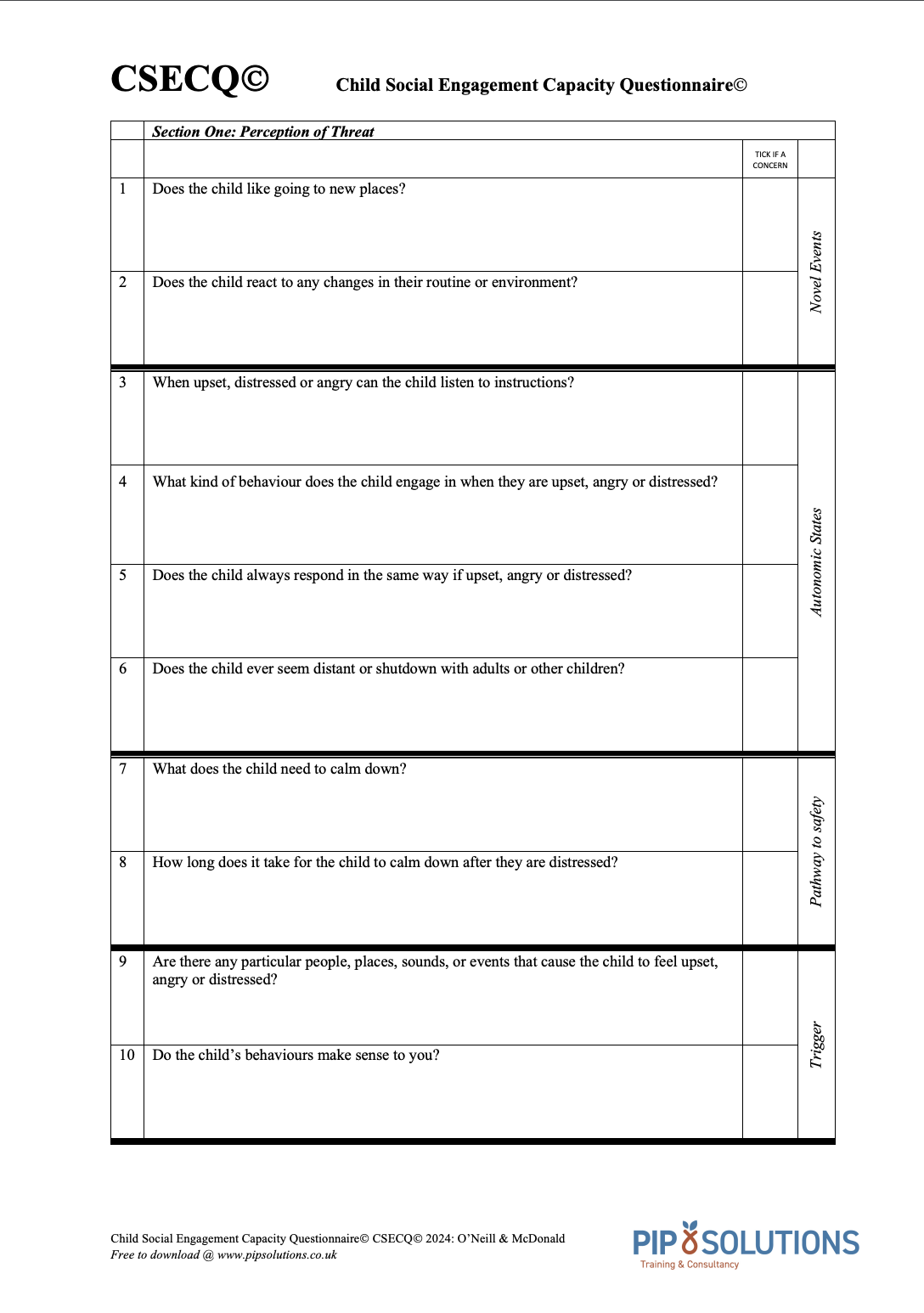
The Child Social Engagement Capacity Questionnaire© (CSECQ©) supports therapists to begin the process of formulating an understanding of their client’s autonomic responses to the environment. This assists the therapist with Case Conceptualisation in the context of three important concepts: 1) Goal Setting, 2) Adult Mentalisation, and 3) Psychoeducational Needs
The first section, Perception of Threat, has 10 questions and is divided into four categories: Novel Events, Autonomic States, Pathways to Safety and Triggers.
The second section, Orienting to Safety, has 6 questions and two categories: Seeking Connection and Environmental Cues of Safety. It considers if the child has capacity for Social Engagement and how this is achieved.
Subscribe below to recieve your Child Social Engagement Capacity Questionnaire©
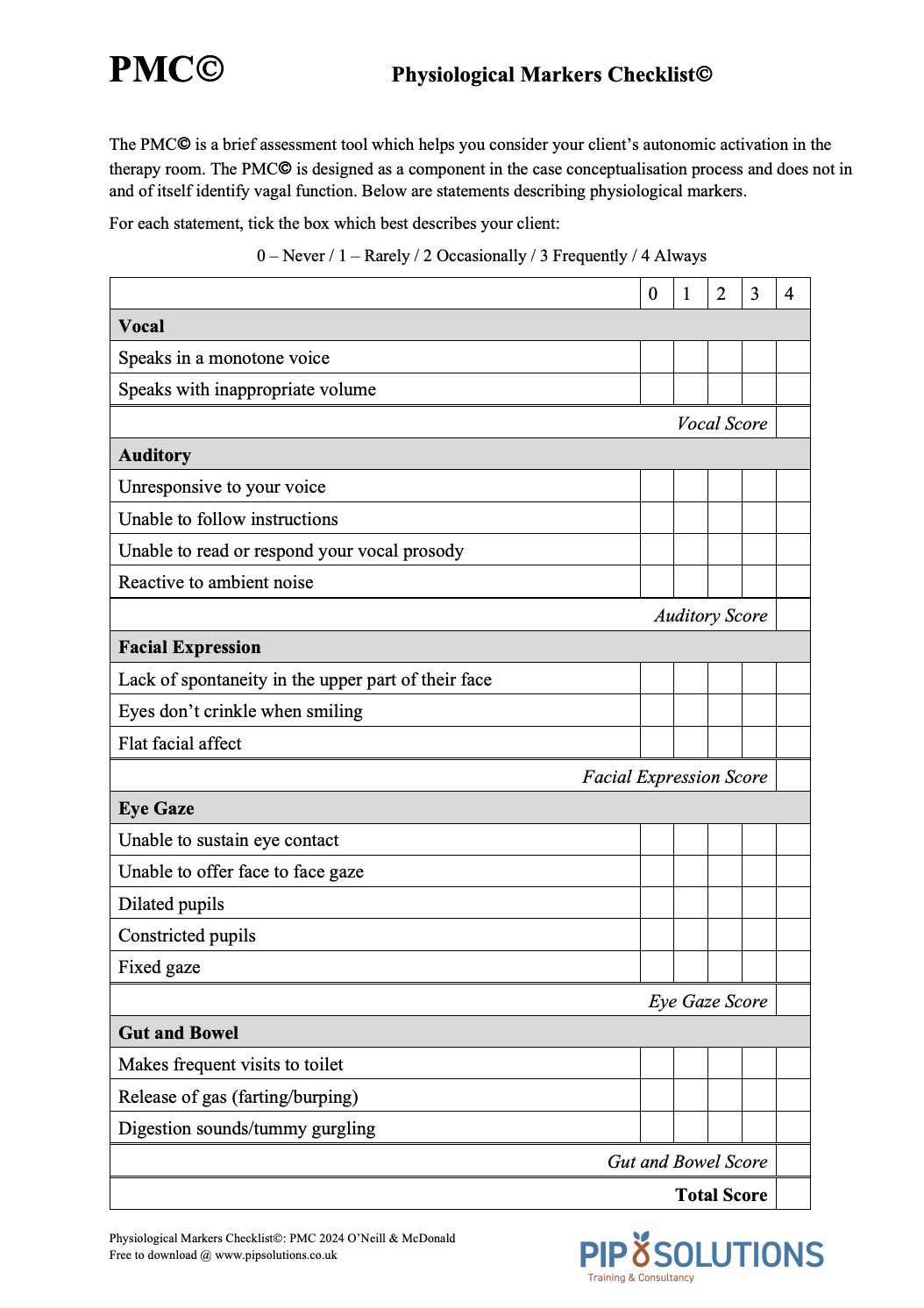
The PMC© is a brief assessment tool which helps you consider your client’s autonomic activation in the therapy room. The PMC© encourages therapists to have focused awareness on clients’ unconscious non-verbal communication about their internal worlds. When utilised throughout the therapeutic process, it serves as an additional measure to consider the client’s development of a neuroception of safety.
This checklist is intended to be used as a component in the case conceptualisation process. Whilst it utilizes a scoring system, we acknowledge that the PMC© is subjective and does not in and of itself identify vagal function or consider any variabilities arising from a diagnosis. The PMC© can be applied to your work with children aged 4 years old to 16 years old. Cultural considerations always need to be held. Its main purpose is to offer a baseline from which the therapist can consider whether it is necessary to focus on procuring a sense of safety for the client.
Subscribe below to recieve your Physiological Markers Checklist©