The Needs Paradox®, developed by Tara McDonald and Dr Karen O’Neill (2024), describes the psychobiological conflict that children affected by relational trauma experience when they are offered care, attunement and co-regulation.
Rooted in early attachment wounding, this trauma leaves children with deeply embedded defensive strategies that were once essential for survival. In the context of safer caregiving in the here and now, these same strategies no longer serve them.
The result is a profound inner paradox: a longing for connection, held alongside a fear of it.
Understanding this internal conflict allows clinicians to respond in ways that respect both the protective function of these adaptations and the child’s need for safety and regulation, attending to both cognitive processing and embodied responses to trauma.
The Needs Paradox® offers a compassionate, clinically grounded framework for making sense of these dynamics. It supports therapists and caregivers to gently restore connection, co-regulation and relational safety.
Relational trauma is deeply rooted in attachment wounding. For children affected, being offered care, attunement and co-regulation may, rather than soothe them, activate defensive relational strategies that were once essential for survival.
This has important implications for therapeutic practice. Transference dynamics in the therapeutic relationship can have a powerful impact on the therapist and need to be understood and used therapeutically. Healing requires the therapist to attend deliberately to the repair of the child’s original relational wounds, with parents and caregivers actively involved throughout the course of their child’s therapy.
The Needs Paradox® helps practitioners to:
Our training brings The Needs Paradox® into clinical practice. It is designed for play therapists, child and adolescent psychotherapists, creative arts therapists and school counsellors working with children and young people affected by relational trauma, and with their caregivers.
Pre-course videos: short videos introduce the key ideas before the live training, so the three days can focus on depth and application.
Three days of live online training (via Zoom): learning through theory, reflection, case application and experiential practice. You’ll explore the three core pillars of The Needs Paradox®, structured and non-directive approaches, transference, working with the wider system, and integrating caregivers through The Reunion.
Two group consultations (via Zoom): small groups of up to six, led by Certified Play Therapists and Supervisors, to help you embed your learning and deepen your understanding.
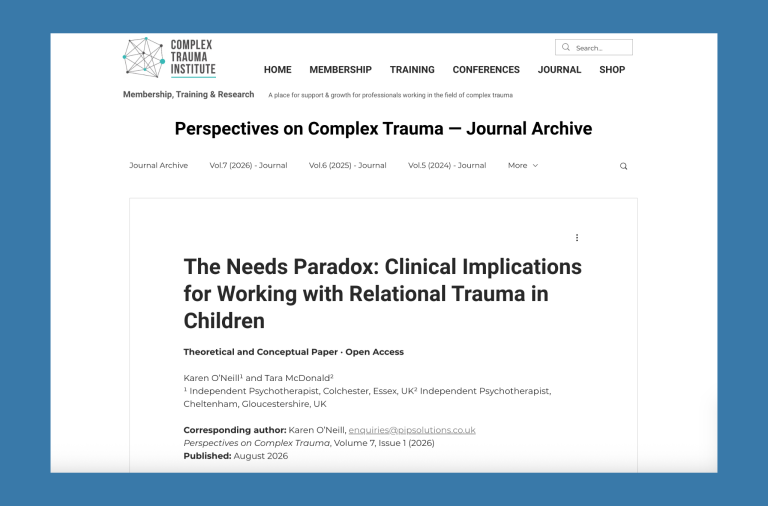
For those wishing to read further, our paper The Needs Paradox: Clinical Implications for Working with Relational Trauma in Children is available open access in Perspectives on Complex Trauma (2026). The paper sets out the theoretical foundations of The Needs Paradox® and examines its clinical implications for therapeutic work with children affected by relational trauma.